The honest test is whether your house currently spends hours at full comfort with nobody in it. If yes, there are savings to capture. If no, you are buying convenience and visibility rather than efficiency, which is a fine reason to buy one as long as you know that is what you are paying for.
Where Smart Thermostat Savings Actually Come From
The savings come from setbacks, not from the hardware being more efficient, and understanding that explains why results vary so much between homes.
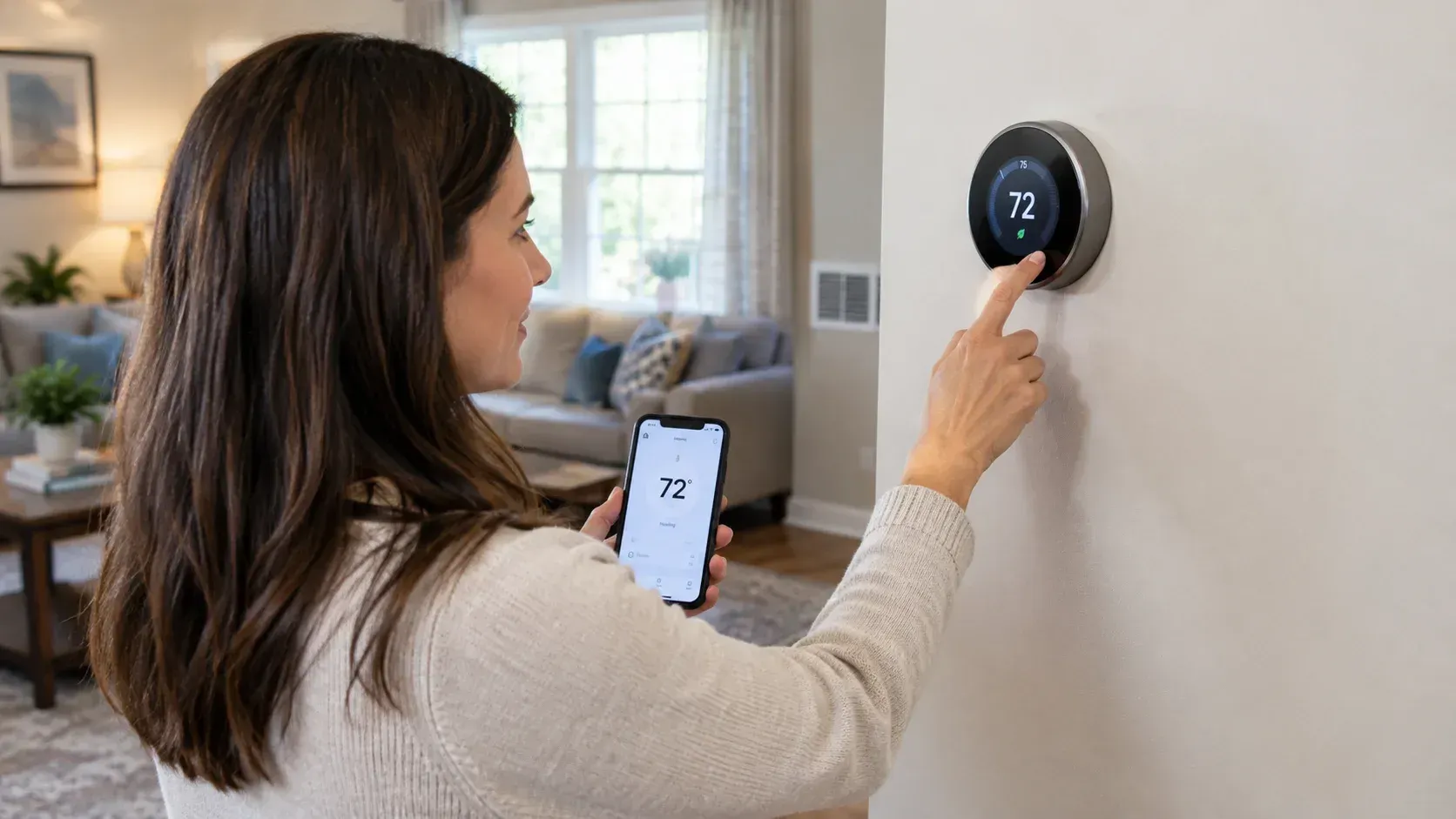
Your furnace runs the same way regardless of what tells it to start. What changes is how often it is asked to. A connected thermostat reduces runtime by:
- Setting back automatically
when the house empties, rather than relying on someone remembering
- Recovering on schedule
so the house is comfortable when people return
- Using geofencing or occupancy sensing
to catch irregular departures
- Reporting runtime,
which shows you how much your system actually works
- Flagging problems early,
such as a system running far longer than usual
That last point is underrated. Runtime reports often reveal a system struggling before the homeowner notices discomfort, which turns a breakdown into a scheduled repair.
What it will not do is make a failing furnace efficient, seal leaking ducts, or fix an oversized system that short cycles. Those are equipment problems, and a controller cannot solve them.
What the Payback Period Really Depends On
Payback varies so widely between homes that any single figure quoted online is close to meaningless for yours.
The variables that decide it:
- How many hours the house sits empty
on a typical week
- How disciplined you already are
with a manual or programmable schedule
- Your heating and cooling costs,
since the same percentage saved is worth more on a bigger bill
- Your system's efficiency,
because savings come off whatever you currently spend
- Installed cost,
including whether wiring work is needed
- Whether a rebate applies
through your utility, which can change the math considerably
Utility rebates are worth checking before you buy, since they are specific to your provider and change over time. The cost of the device itself is only part of the picture, and installation cost is addressed below.
If you want to see where a thermostat upgrade sits against other HVAC spending,
new furnace pricing
is a useful reference point.
Features Worth Paying For and Features That Are Noise
Most of the price difference between models sits in features that matter enormously to some households and not at all to others.
Generally worth it:
- Remote access,
the feature people actually use daily
- Runtime and usage reporting,
useful for spotting system problems
- Filter and maintenance reminders,
which people genuinely forget
- Freeze and high temperature alerts,
valuable for travel or a second property
- Geofencing,
if your schedule is irregular
Usually not worth paying extra for:
- Voice control,
pleasant but rarely the deciding factor
- Remote room sensors,
unless you have a specific problem room, in which case they help a lot
- Learning algorithms,
which often end up overridden by a manual schedule anyway
- Elaborate displays,
on a device mounted in a hallway
The single most important specification is not a feature at all. It is whether the model is compatible with your system, particularly if you have a heat pump, multi stage equipment, or a boiler. Compatibility first, features second.
Why Thermostat Installation Is Not Always Plug and Play
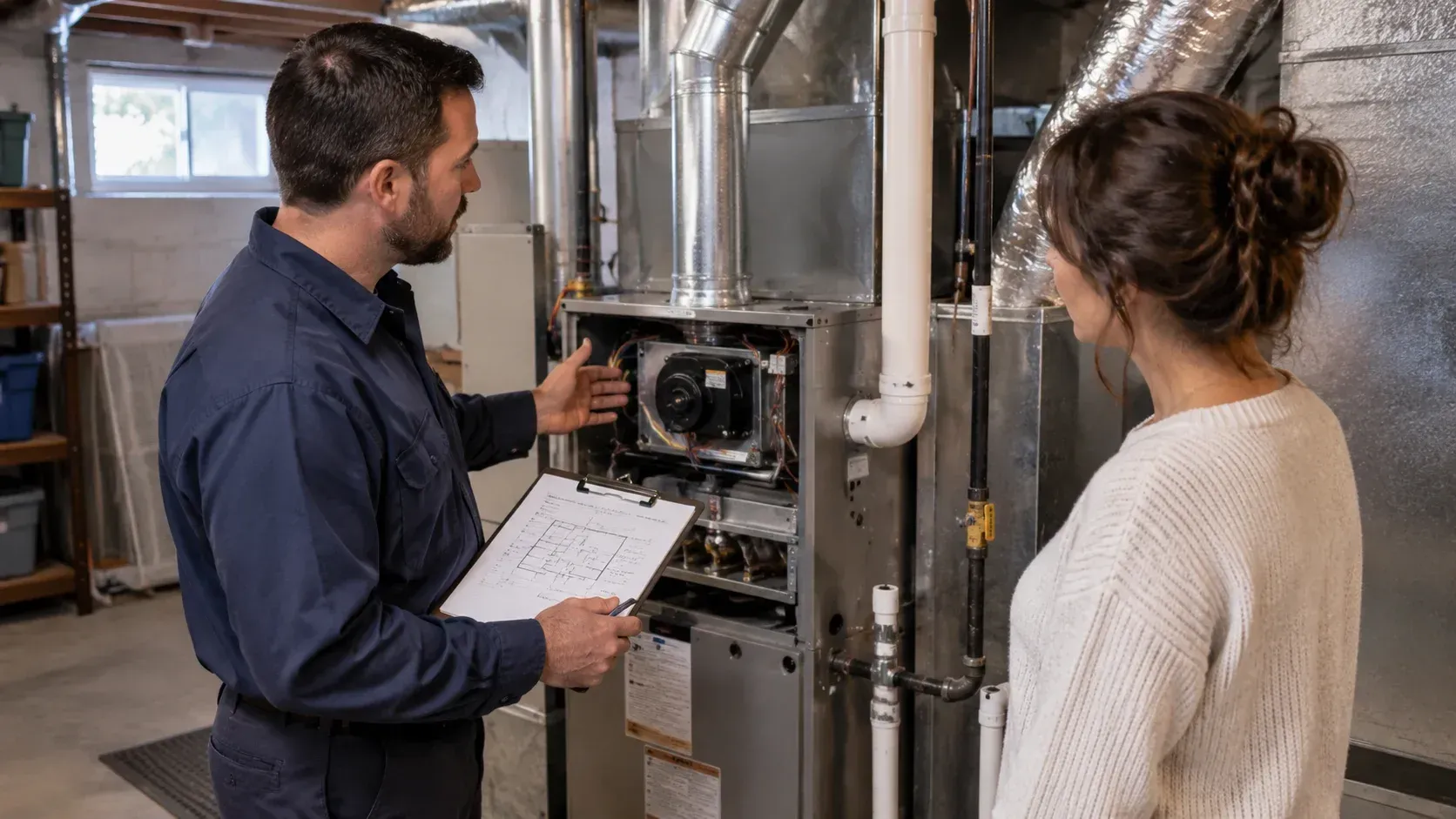
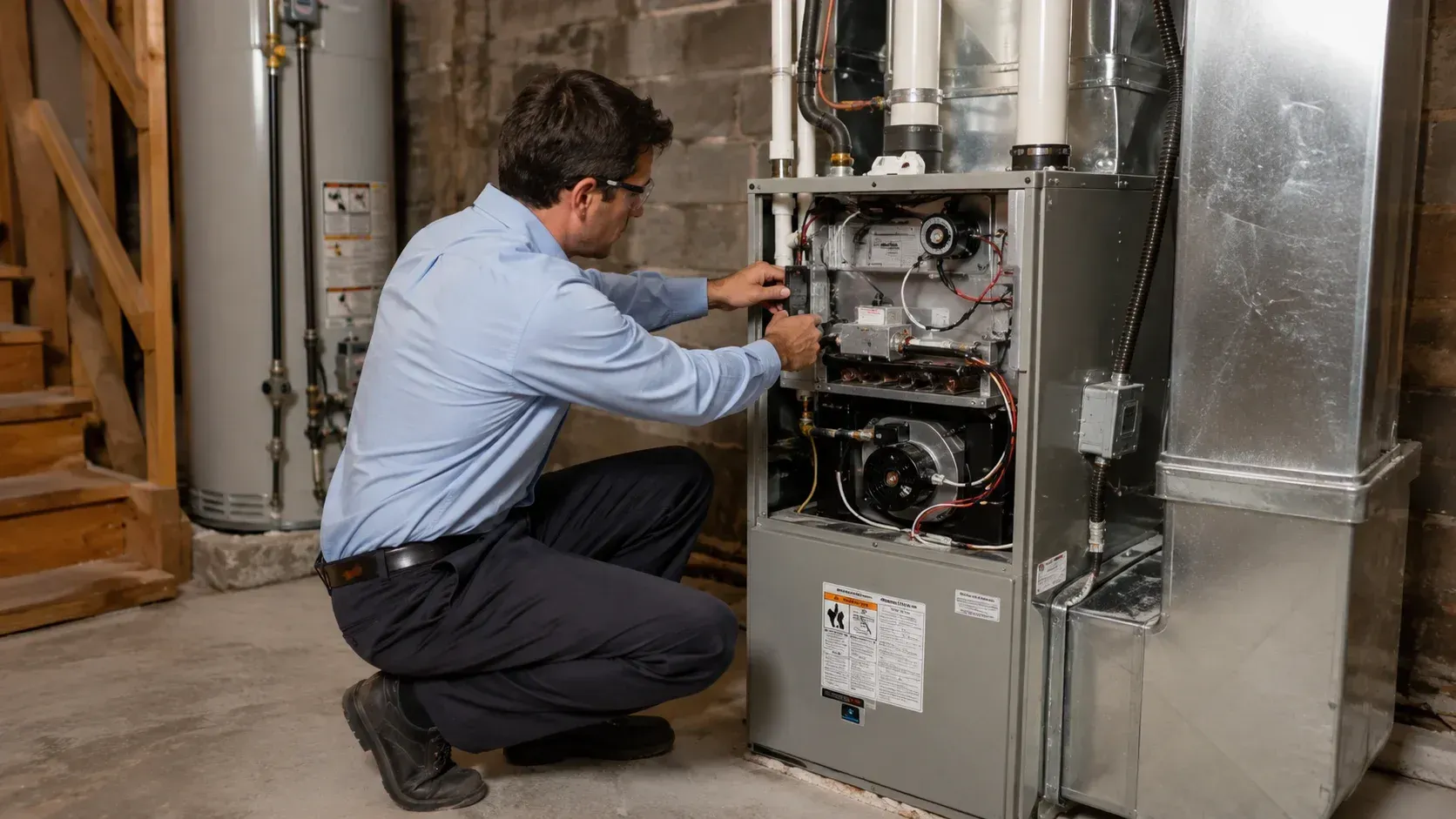
Swapping the device looks like a fifteen minute job until the wall opens up, and in older Monmouth County housing stock it often is not.
The usual complications:
- No C wire.
Most connected models need a common wire for continuous power. Older installations frequently do not have one, which means running new wire or adding an adapter.
- Heat pump wiring,
which is more involved and easy to configure incorrectly.
- Multi stage or two stage systems,
where wrong configuration can leave a stage unused.
- Boilers and hydronic systems,
which have their own control requirements.
- Line voltage systems,
which are not compatible with most low voltage models at all.
A thermostat wired wrong can run a system in ways it was not designed for. If your setup is anything other than a straightforward single stage furnace with a C wire present, it is worth having it done rather than discovering the problem mid-winter. Pairing the change with
heating maintenance
is an efficient way to handle it, since the system is being looked at anyway.
The Honest Case Against Upgrading
There are households where this purchase is the wrong move, and it is worth saying so plainly.
Skip it, or wait, if:
- Someone is home all day
at a consistent temperature. There is little idle time to recover.
- Your system is near the end of its life.
Replace the equipment first, then choose a control that matches it.
- Your ductwork leaks or rooms are badly uneven.
A controller cannot fix distribution. You will spend the money and still have a cold bedroom.
- Nobody in the household will use the app.
The features that justify the cost go unused.
- You already run a disciplined manual schedule.
You are capturing most of the available savings by hand.
That third point is the one worth sitting with. Uneven rooms are almost always a duct, airflow, or sizing problem, and a smart thermostat is a common and expensive wrong answer to it.
Conclusion
The question is not whether these devices work. It is whether your house has waste to eliminate. A home that empties on a predictable pattern will see real benefit, and a home that is occupied all day at a steady temperature mostly will not. Check your system's compatibility before the feature list, budget for a C wire if the house is older, and fix equipment or duct problems first, because a better controller running a worse system is still a worse system.
Ask About Thermostat Installation
If you are weighing an upgrade, we will tell you whether your system supports it and whether your household will actually see the benefit. Breeze HVAC has been a local, family owned business in Monmouth County since 1984, with licensed technicians, Rheem and Ruud certified dealer status, and a 10 year manufacturer warranty on new systems. We also include a free Wi-Fi thermostat with the purchase of a complete system. Call (732) 242-9999 or
get in touch
and we will give you a straight answer, including when the answer is to wait.