Is It Time to Replace or Repair Your Furnace in Monmouth County, New Jersey?

Table of Contents
- Introduction
- How Long Should Your Furnace Last
- Common Signs Your Furnace Needs Repair
- When Repair Makes Sense
- When Replacement Is the Better Choice
- The 50 Percent Rule Explained
- Energy Efficiency and Long-Term Savings
- Costs of Furnace Repair vs. Replacement
- Preparing for a Furnace Decision
- Conclusion
- Frequently Asked Questions
Key Takeaways
- The decision to repair or replace depends on your furnace's age, repair costs, frequency of breakdowns, and energy efficiency
- Furnaces typically last 15 to 20 years, and replacement becomes more economical as systems approach the end of their lifespan
- A good rule of thumb is to replace if repair costs exceed 50 percent of a new system's cost
- Newer furnaces offer better energy efficiency, which can reduce your heating bills despite the higher upfront investment
- Regular maintenance extends furnace life and helps you identify when replacement is becoming necessary
Introduction
Whether to repair or replace your furnace depends primarily on three factors: the age of your system, the cost of the repair, and how often your furnace breaks down. If your furnace is under 10 years old and the repair costs less than half the price of a replacement unit, repair usually makes sense. If your system is older than 15 years and has been breaking down regularly, replacement often becomes the more practical and economical choice.
This decision matters because your furnace is one of your home's most critical systems. In Monmouth County, where winter temperatures can dip below freezing for extended periods, a heating system that fails isn't just inconvenient - it affects your family's comfort and safety. Making the right call between repair and replacement saves you money over time and ensures your home stays warm when you need it most.
How Long Should Your Furnace Last
Most furnaces have a lifespan of 15 to 20 years under normal operating conditions. Some units last longer with excellent maintenance, while others may start showing serious problems around the 12-year mark.
Several factors influence how long your specific furnace will last. The initial quality of the unit matters - higher-quality brands often outlast budget models. How well you maintain the system also plays a major role. Furnaces that receive annual maintenance and regular filter changes tend to last longer than neglected systems.
Your climate also affects furnace lifespan. In colder regions like New Jersey, furnaces work harder during longer heating seasons, which can reduce their operational life compared to the same model used in milder climates. If you've had your current furnace for 15 years or more, you're already in borrowed time, and replacement is something to seriously consider.
Common Signs Your Furnace Needs Repair
Understanding what's wrong with your furnace helps you decide whether repair is realistic or replacement is imminent.
Unusual Noises
Banging, grinding, or rattling sounds coming from your furnace suggest mechanical issues. Some noises can be fixed with repairs, while others indicate major component failure that might not be worth fixing.
Uneven Heating
If some rooms stay warm while others stay cold, your furnace may not be distributing heat properly. This could be a ductwork problem, a thermostat issue, or a furnace malfunction.
Frequent Restarts
A furnace that cycles on and off constantly is working too hard. This pattern shortens your system's lifespan and wastes energy.
Higher Energy Bills
An aging or struggling furnace becomes less efficient. If your heating bills climb without a change in your usage or outdoor temperature, your furnace efficiency is likely declining.
Visible Corrosion or Leaks
Rust, water pooling, or visible wear inside your furnace cabinet are signs of deterioration. Some issues can be addressed, but extensive corrosion often means replacement is necessary.
Yellow Pilot Light
A healthy furnace flame should be blue. A yellow pilot light suggests incomplete combustion, which is a safety concern that needs immediate professional attention. If you notice this or other warning signs, heating repairs should be evaluated by a professional quickly.
When Repair Makes Sense
Repair is typically the right choice when several conditions are met.
Your furnace is relatively young
If your system is less than 10 years old, repairs usually extend its useful life efficiently. At this age, most issues are component-specific rather than system-wide.
The repair cost is reasonable
When a repair costs a few hundred dollars rather than several thousand, repair is economically sensible. A $400 repair on a furnace you plan to keep for several more years is money well spent.
The problem is specific and clear
If a technician identifies one broken component like a blower motor or a thermostat issue, repair targets the actual problem. These focused repairs often succeed.
Your furnace has been well-maintained
Systems with a history of regular maintenance are more likely to respond well to repairs. A furnace that's been neglected may have multiple underlying issues that make repair less reliable.
You don't have frequent breakdowns
If this is your first significant repair in several years, replacement isn't yet necessary. Occasional repairs are normal and expected.
When Replacement Is the Better Choice
Replacement becomes the smarter decision when your situation matches several of these criteria.
Your furnace is 15 years or older - At this age, replacement is often more economical than ongoing repair. Even if the current repair is relatively inexpensive, you're likely to face another breakdown within a year or two.
Repair costs exceed 50 percent of replacement cost - If fixing your furnace costs more than half what a new system would cost, replacement starts to make financial sense. This varies by your system, but it's a useful guideline.
Your furnace breaks down repeatedly - Multiple repairs within a short period suggest your system is failing. Once a furnace starts breaking down frequently, replacement usually follows within a couple of years anyway.
Your energy bills are consistently high - Older furnaces lose efficiency over time. If your heating bills are noticeably higher than your neighbors' bills or higher than they were a few years ago, a new, more efficient system pays for itself through energy savings.
You notice significant corrosion or safety issues - Visible rust, cracks in the heat exchanger, or yellow pilot lights are serious concerns. Systems with safety issues need professional evaluation, and replacement is often recommended.
You're planning to stay in your home - If you'll be in your house for several more years, a new furnace's efficiency gains and reliability justify the investment. If you're planning to sell soon, a repair might stretch the system's life just long enough.

The 50 Percent Rule Explained
Many heating professionals use what's called the 50 percent rule to help homeowners decide between repair and replacement.
Here's how it works: Multiply the age of your furnace by the cost of the repair. If that number equals or exceeds 50 percent of the cost of a new furnace, replacement is usually the better choice.
For example, if your furnace is 12 years old and the repair costs 800 dollars, the calculation is 12 times 800 which equals 9,600. If a new furnace costs around 5,000 dollars, then 50 percent of that is 2,500. Since 9,600 exceeds 2,500, replacement likely makes more sense.
This rule isn't absolute - it's a starting point for your thinking. Your specific situation might justify repair even if the rule suggests replacement, or vice versa. But it gives you a concrete way to think about the decision rather than guessing.
Energy Efficiency and Long-Term Savings
New furnaces are significantly more efficient than older models. Current furnaces often have Annual Fuel Utilization Efficiency (AFUE) ratings of 90 to 98 percent, meaning they convert 90 to 98 percent of fuel into usable heat. Older furnaces from the 1990s or early 2000s might have AFUE ratings of only 60 to 80 percent.
This efficiency difference translates directly to your heating bills. A new high-efficiency furnace might reduce your heating costs by 20 to 30 percent compared to an aging system. Over a furnace's 15 to 20-year lifespan, these savings add up significantly.
In Monmouth County, where winter heating costs are substantial, the energy savings from a new furnace can offset its installation cost within 5 to 10 years. After that point, you're essentially heating your home for free compared to what you'd spend on an older system.
Additionally, newer furnaces qualify for energy efficiency tax credits in some cases, which further reduce the net cost of replacement.
Costs of Furnace Repair vs. Replacement
Understanding typical costs helps you evaluate your options realistically. If replacement becomes your choice, understanding what heating installation involves helps you compare quotes from contractors.
Common repair costs:
- Blower motor replacement: 400 to 600 dollars
- Thermostat repair or replacement: 150 to 400 dollars
- Gas valve repair: 300 to 600 dollars
- Heat exchanger repair: 800 to 2,000 dollars
- Ignition system repair: 300 to 500 dollars
These are approximate ranges and vary based on the specific furnace model and your local market.
Replacement costs:
- Basic furnace installation: 2,500 to 4,000 dollars
- Mid-range high-efficiency furnace: 4,000 to 6,000 dollars
- Premium high-efficiency furnace: 6,000 to 8,000 dollars
Installation costs include labor, the furnace unit, and any modifications to your existing ductwork or connections.
When you compare a repair cost of 1,500 dollars to a replacement cost of 4,000 dollars, repair looks attractive. But if your furnace is 16 years old and you can expect another failure within 12 to 24 months, that 1,500-dollar repair is just delaying the larger 4,000-dollar replacement decision.
Preparing for a Furnace Decision
Before you commit to either repair or replacement, gather information and get professional guidance.
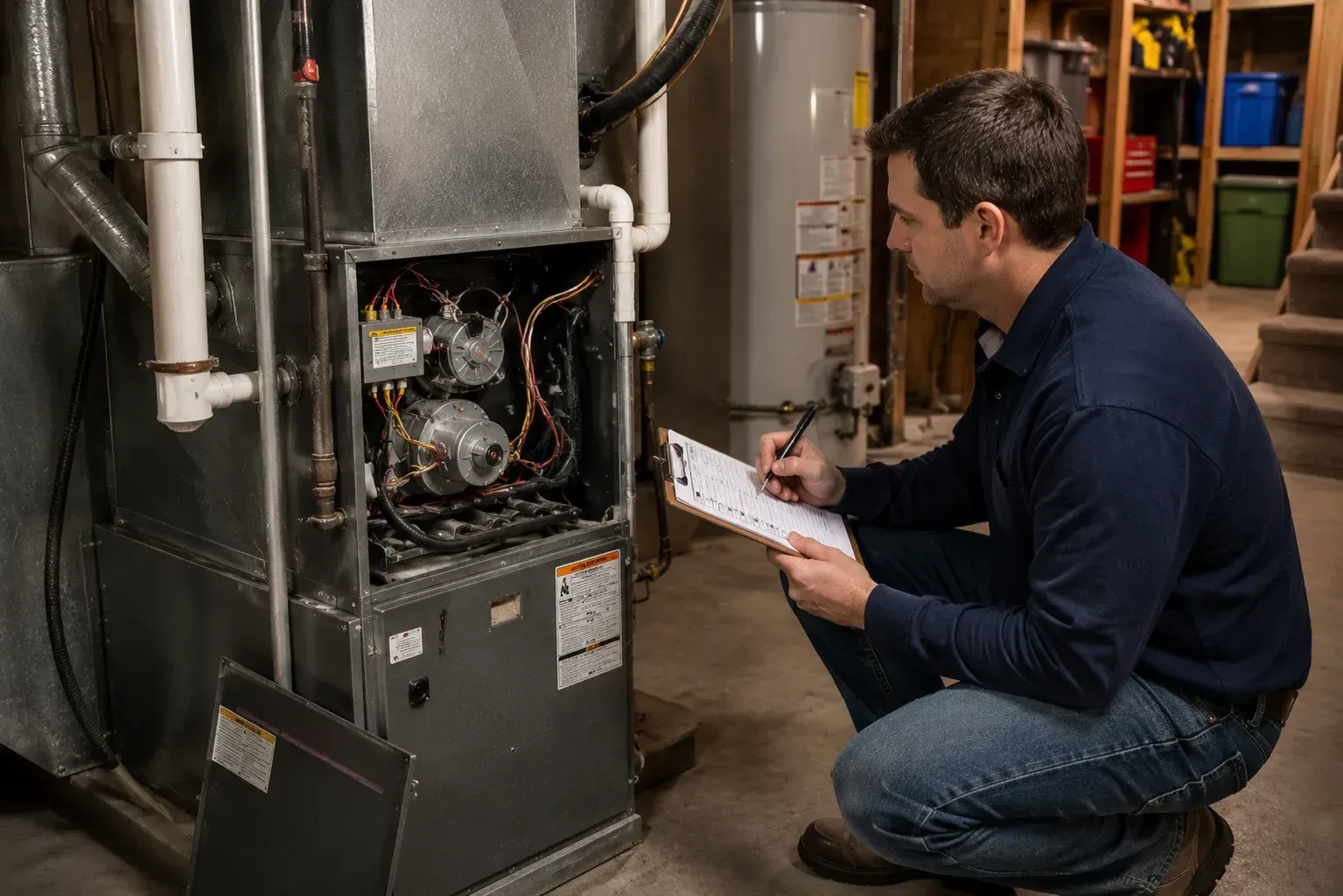
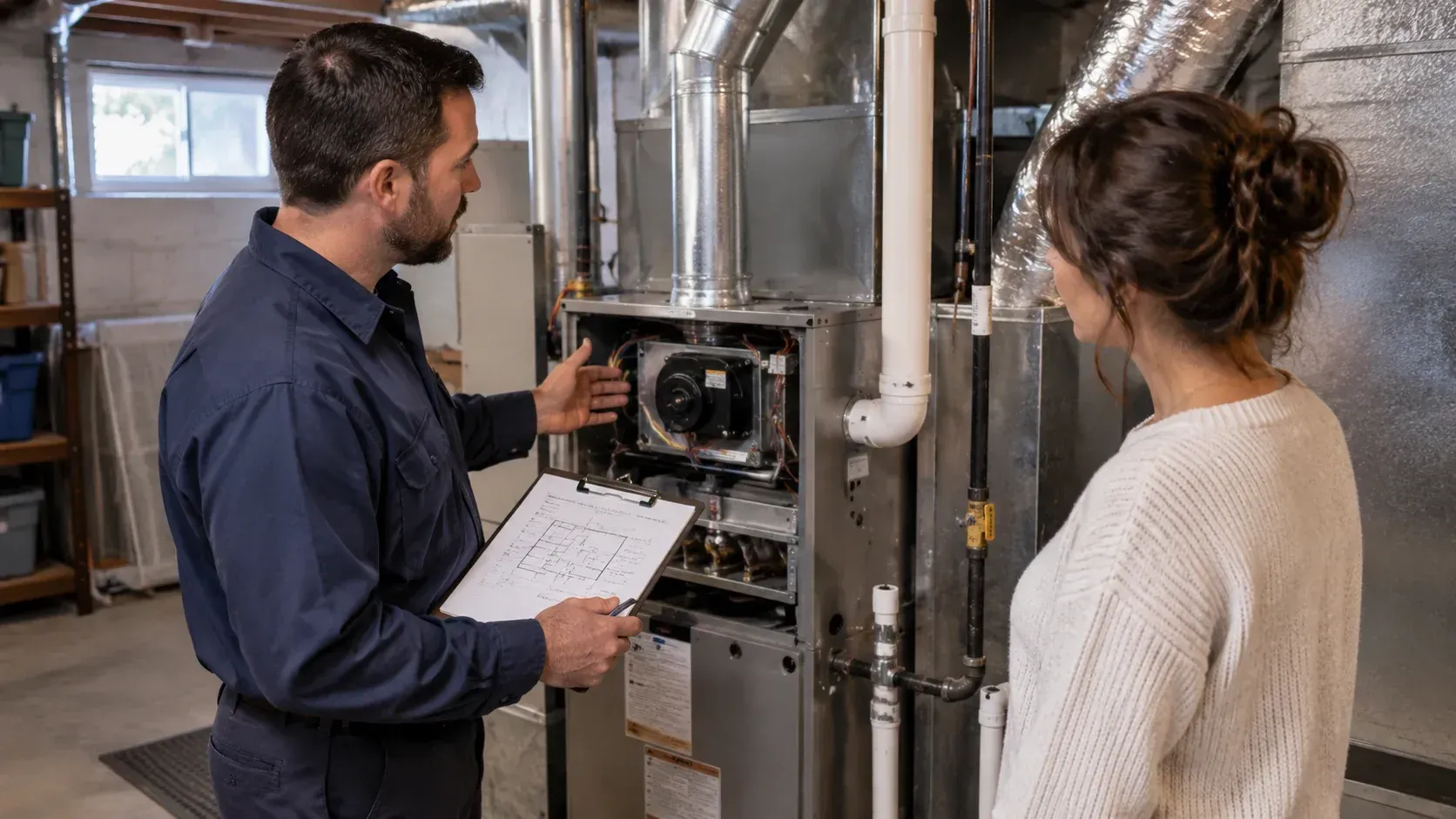
Schedule a professional inspection - A qualified heating technician can assess your furnace's condition, estimate remaining lifespan, and provide repair and replacement cost estimates. This professional perspective is invaluable for making your decision.
Ask about maintenance history - If you recently purchased your home, request the previous owner's furnace maintenance records. Systems with documented regular heating maintenance often have more predictable remaining life and fewer unexpected failures.
Get multiple quotes - If you're considering replacement, get quotes from multiple contractors. Pricing varies, and you want to understand what's typical in your area.
Consider the timing - Winter is the worst time to need furnace work because emergency service costs more and replacement timelines are longer. If replacement seems likely, scheduling it in fall gives you more options and potentially better pricing.
Understand your warranty - Ask what warranty coverage comes with either option. A repair might include a warranty on the specific part replaced. A new furnace typically includes 5 to 10 years of manufacturer coverage.
Think long-term - Consider your plans. If you'll be in your home for many more years, replacement efficiency gains matter more. If you're planning to sell in a few years, extending the current system's life through repair might be practical.
Conclusion
The decision between furnace repair and replacement comes down to weighing your furnace's age, the repair cost, your system's reliability history, and your long-term plans for your home. There's no universal right answer, but the guidelines in this article help you think through the decision systematically.
If your furnace is young and the repair is inexpensive, repair almost always makes sense. If your system is old, repairs are expensive, or breakdowns are becoming frequent, replacement becomes the smarter choice. Use the 50 percent rule as a starting point, and don't ignore the energy efficiency benefits of newer systems.
Whatever you decide, the important thing is making an informed choice based on your specific situation rather than guessing or simply reacting to an emergency breakdown. Taking time to evaluate your options helps you manage heating costs and maintain reliable home comfort throughout Monmouth County's cold winters.
If you need professional guidance evaluating your specific furnace situation, a qualified heating technician can review your system and help you understand whether repair or replacement aligns with your needs and budget. Local HVAC professionals in Monmouth County can assess your equipment, explain your options, and answer specific questions about your heating system.
Frequently Asked Questions
Q: Is it worth repairing a furnace that's 18 years old?
A: At 18 years old, your furnace is beyond its typical lifespan. Even if the current repair seems inexpensive, you should be prepared for the possibility that replacement will be necessary soon. Get a professional assessment of your system's overall condition. If the technician indicates you have several more years of reliable operation, a repair might extend that timeframe. If they suggest the system is deteriorating, replacement planning is wise. Many homeowners in this situation find it practical to replace rather than invest in repairs on equipment that's already outlived its expected life.
Q: How much does furnace maintenance cost in Monmouth County?
A: Annual furnace maintenance typically costs 100 to 200 dollars. This usually includes inspection, cleaning, lubrication of moving parts, filter replacement, and adjustments to ensure safe and efficient operation. Some contractors offer maintenance plans that bundle multiple visits into one annual fee. While maintenance costs money upfront, it often saves you significantly by extending furnace life and preventing expensive emergency repairs. Regular maintenance also helps identify problems early when they're less costly to address. Business owners may find that commercial HVAC maintenance plans provide additional benefits and scheduling flexibility.
Q: Can I repair my own furnace to save money?
A: Unless you're a trained HVAC technician, furnace repair is not a DIY project. Furnaces involve gas, electricity, and precise mechanical components. Improper repairs can create safety hazards like gas leaks or carbon monoxide issues. Additionally, many furnace warranties become invalid if someone other than a licensed technician performs work. Always hire a qualified professional for furnace repair and replacement. The safety risks and warranty implications far outweigh any labor costs you might save.
Q: What's the difference between AFUE 90 and AFUE 95?
A: AFUE stands for Annual Fuel Utilization Efficiency, expressed as a percentage. An AFUE rating of 90 means the furnace converts 90 percent of fuel into heat. AFUE 95 converts 95 percent. While a 5-point difference sounds small, it translates to a measurable reduction in your heating bills. A furnace with AFUE 95 will cost somewhat more upfront than one with AFUE 90, but if you plan to keep it for 15 to 20 years, the energy savings often justify the higher initial investment. The choice depends on your budget and how long you'll keep the system.
Q: Should I replace my furnace before it breaks down completely?
A: This is a personal decision based on your circumstances. If your furnace is 15 years old and running reliably, you might operate it until it fails. However, planned replacement offers advantages: you choose the timing and contractor rather than facing emergency service, you avoid being without heat during cold weather, and you can upgrade to a higher-efficiency model rather than settling for whatever is available quickly. If your furnace is showing age-related signs like increasing energy bills or more frequent repairs, planning a replacement rather than waiting for failure can be practical.
Q: How do I know if my furnace has a cracked heat exchanger?
A: A cracked heat exchanger is a serious safety concern because it can allow carbon monoxide to enter your home. You may notice a yellow or flickering pilot light, a sweet or musty odor, or your furnace shutting down unexpectedly. However, you cannot reliably diagnose a cracked heat exchanger yourself. If you suspect this problem, call a professional heating technician immediately. They have tools to detect heat exchanger cracks. If one is confirmed, replacement is necessary because the issue cannot be safely repaired. This is one situation where replacement is not optional.
Q: Is now a good time to replace my furnace?
A: The best time to replace a furnace is in fall or spring when heating contractors have availability and can complete the work on your schedule. Late fall is ideal because it prepares you for winter. Avoid waiting until winter unless necessary, because emergency replacement during cold weather is more expensive and contractors are less available. If your current furnace is failing or you're planning replacement, contacting a heating professional in early fall gives you time to arrange financing, select equipment, and schedule installation before the busy winter season.
Recent Posts